

English
- English
- 中文
- Русский
Xi'an Kangyate | Radar Level Gauge Fearless of Dust Conditions
Author:Xi'an Kangyate Measurement and Control Technology
Click:
Time:2025-05-30 10:31:18
Radar level gauges have demonstrated extraordinary strength and stability in the field of industrial measurement, especially in complex environments with dust interference. Its unique working principle endows it with the characteristic of being fearless of dust, providing accurate and reliable level monitoring for production processes in many industries.
foreword
Radar level gauge is not afraid of dust conditions
The radar level gauge mainly achieves level measurement based on the emission and reception of electromagnetic waves. The electromagnetic waves emitted from the instrument head propagate at a constant speed towards the surface of the measured material. When electromagnetic waves encounter the surface of a material, reflection occurs, and some of the reflected waves are received by the radar level gauge. By accurately measuring the time interval between the emission and reception of electromagnetic waves, combined with the propagation speed of electromagnetic waves, and using a specific calculation model, the distance between the material and the radar level gauge can be accurately calculated, thereby determining the height of the level. This working principle based on time measurement and electromagnetic wave characteristics fundamentally determines that the radar level gauge has strong anti-interference ability, enabling it to work stably in dusty environments.
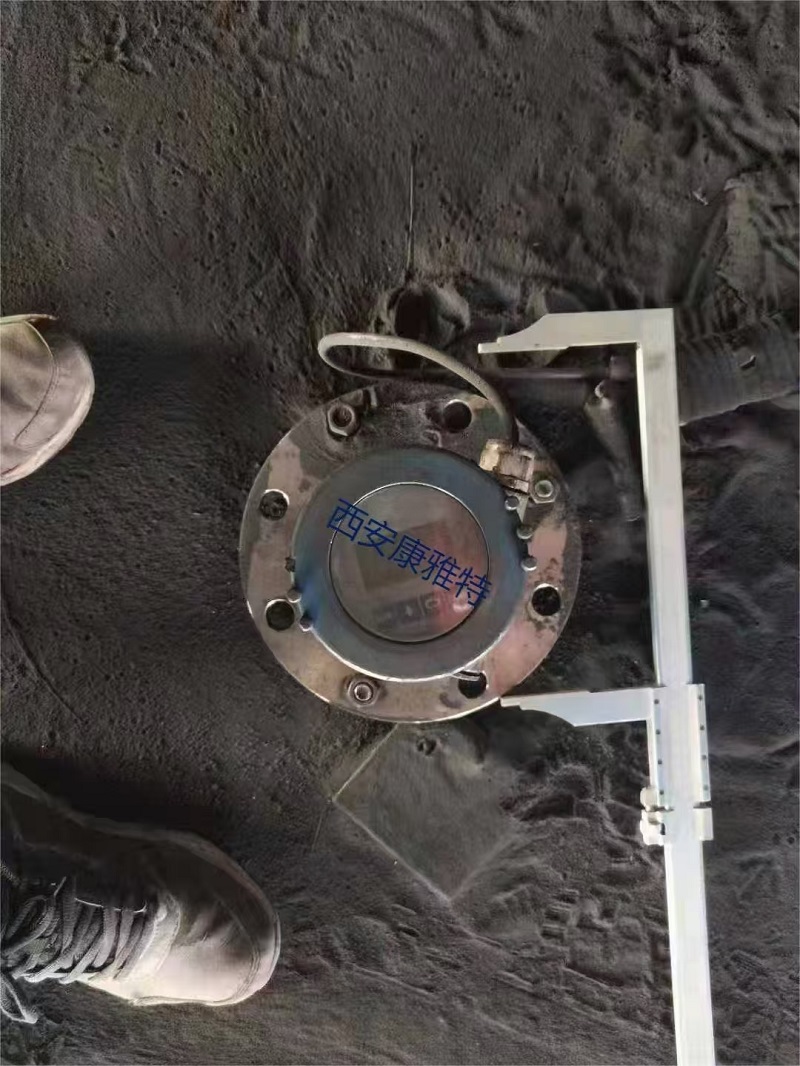
In industrial scenarios with high levels of dust, ordinary level measuring equipment often faces many problems. For example, optical measurement equipment relies on the propagation and reception of light, while dust can severely scatter and obstruct light, resulting in weakened or even lost measurement signals and inability to accurately obtain level information. Mechanical contact measuring equipment is susceptible to the invasion of dust particles in dusty environments, causing blockage, wear, or jamming of mechanical components, which affects the accuracy of measurement and the normal operation of the equipment. In contrast, radar level sensors can effectively avoid these drawbacks. The antenna design of a radar level gauge is one of the key factors in its resistance to dust interference. The antenna surface is usually treated with special coatings or materials, which have extremely low surface energy and smoothness, making it difficult for dust to adhere to its surface. Even if a small amount of dust accidentally adheres, electromagnetic waves can easily penetrate these tiny layers of dust particles without being significantly affected by scattering or absorption. In addition, the signal processing system of the radar level gauge has powerful filtering and anti-interference algorithms, which can further eliminate possible clutter interference and ensure the accuracy and stability of the measurement data.

In actual industrial production, radar level gauges are widely used and have significant effects. Taking the fly ash silo of a thermal power plant as an example, a large amount of fine dust is generated during the transportation and storage of fly ash. Traditional level measurement devices often encounter problems such as large measurement errors and frequent malfunctions in such high dust environments. After adopting a radar level gauge, it is possible to monitor the level changes in the fly ash silo in real time and accurately. Whether in the stage of large-scale feeding of fly ash or during long-term storage, the radar level gauge can stably output accurate level signals, providing reliable data support for power plant operators to adjust conveying equipment and storage strategies in a timely manner, avoiding situations such as fly ash overflow or insufficient inventory. Radar level gauges also play an important role in measuring raw material and cement storage in the cement production process. The cement dust generated during the cement production process has high concentration and strong diffusion, but the radar level gauge, with its excellent performance, can accurately measure the height of materials in the warehouse in such harsh environments. This helps optimize the production process of cement, ensuring the reasonable ratio of various raw materials and stable production of cement, while reducing energy waste and environmental pollution caused by inaccurate level measurement.
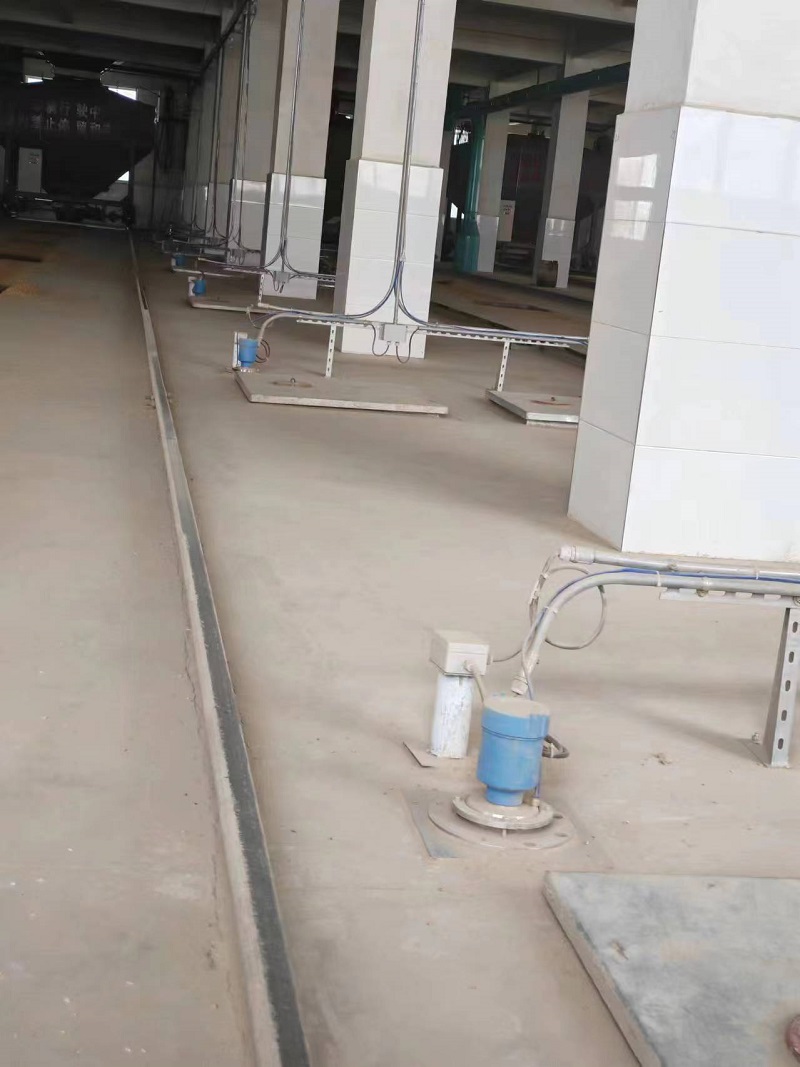
The radar level gauge, with its unique working principle based on electromagnetic waves, carefully designed antenna structure, and advanced signal processing technology, has demonstrated extremely high reliability and accuracy in the face of dust interference. It provides an effective solution for level measurement in industrial production, especially in places with widespread dust and harsh environments, ensuring the continuous, stable, and efficient operation of the production process. It has become an indispensable and important measuring equipment in the field of modern industrial automation control.

Ideal choice for Xi'an Kangyate radar level gauge
Xi'an Kangyate always adheres to the spirit of innovation and craftsmanship, focusing on the research and production of radar level sensors. Our team, with profound professional knowledge and rich industry experience, carefully creates excellent products that are not afraid of dust working conditions. For many years, our radar level sensors have been successfully applied in various industrial fields, from dusty mines to dusty factory workshops. They provide accurate measurement, stable performance, and high reliability to safeguard industrial production. We deeply understand the importance of quality and service, constantly optimizing products and improving service quality. Welcome customers to consult us. We will tailor the most suitable level measurement solution for you with a professional attitude and enthusiastic service, and work together to create a better future for industry.

Contact Us
Contact: Manager Geng 177 9169 7928
Contact: Miss Lang 181 9233 8460
Fax:029-65664129
QQ:370502212 丨2635499270
Collaboration E-mail:marketing@kytck.com
Address: 5th Floor, Taide Building, Fengcheng 1st Road, Weiyang District, Xi'an City


Petty Zhang WhatsApp Fancy WhatsApp
Fancy WhatsApp:+86 152 9119 1557
Fancy WeChat:+86 152 9119 1557
E-mail:fancy@kytck.com


COPYRIGHT © 2025 Xi'an Kangyate Measurement and Control Technology Co., Ltd. All rights reserved. Shaanxi ICP No. 19003976-1
 Petty Zhang
 Petty Zhang
